
Presented by Martin Munzel · Recorded at SAP Controlling 2016
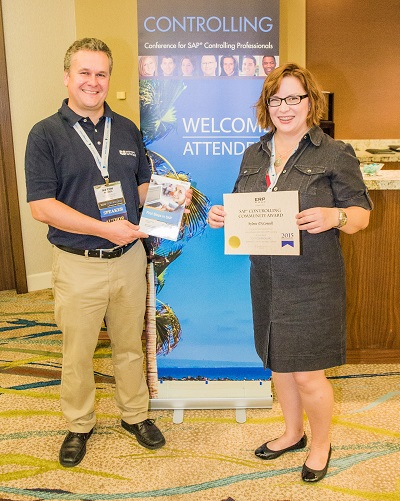 SAP templates support activity allocation in Controlling by using functions and formulas to determine the resources a receiver consumes. In this conference recording, SAP CO expert Martin Munzel explains when templates can be useful and how to get started.
If templates seem too complex, this session offers a practical introduction to creating a template, comparing allocation methods, and addressing common challenges. It also explores formula planning functionality that teams may overlook.
Table of Contents
- Watch the Template Allocation Recording
- What the Session Covers
- What Is SAP Template Allocation?
- About Martin Munzel
- Conclusion
- Glossary
- Reference Materials
Watch the Template Allocation Recording
Explore Martin Munzel’s presentation on using SAP templates for activity allocation in CO.
Watch the Recording on YouTube →
Recording context: This session was recorded at the 2016 conference and reflects the SAP functionality available at that time. Check the documentation for your edition and release before applying a configuration example.
What the Session Covers
- How template-based actual activity allocation differs from other allocation methods.
- How to create a template.
- Common template challenges and approaches to resolving them.
- Often underused functionality for formula planning.
Use the presentation to evaluate whether templates could help your organization model more complex allocation scenarios.
What Is SAP Template Allocation?
In classic SAP Controlling, template allocation determines resource consumption through configured rules. A template can identify the supplying business process or cost center/activity type, calculate the required quantity, and evaluate whether an allocation applies. The quantity is then valued using the applicable price.
For example, a business may want to allocate an inspection activity according to the number of inspections required by an order. A template can model the quantity rule, while the activity price determines the resulting cost. This is an illustrative business scenario rather than a transcript of the recording.
The quality of the result depends on the sender and receiver setup, driver data, formulas, and valuation settings. Start with one scenario whose expected quantities and costs can be checked independently.
For related fundamentals, explore SAP activity types, categories, and prices and our SAP Product Cost Controlling in S/4HANA guide.
About Martin Munzel
Martin Munzel is an SAP Controlling consultant, author, trainer, and international conference speaker. His experience includes SAP FI/CO implementations in manufacturing, wholesale, and the public sector across Europe, Asia, and North America.
At the time of this presentation, Martin was introduced as co-founder and managing director of Espresso Tutorials, a publisher of practical SAP learning resources. His books include New SAP Controlling Planning Interface and First Steps in SAP.
Conclusion
SAP templates provide a way to connect allocation quantities to business rules and operational data. Martin’s session offers a starting point for understanding the technique, while the current SAP documentation helps you assess its use in your own system.
Improve Your SAP Cost Allocations
ERPCorp helps teams review activity allocation, Product Costing, and Controlling configuration to make manufacturing costs easier to explain.
Explore ERPCorp SAP Consulting Services →
Continue Learning with ERPCorp
Explore membership for access to SAP Finance and Controlling conference session recordings and technical learning resources.
Glossary
Activity Allocation
The assignment of internal activity quantities and associated costs from a sender to a receiver.
Activity Price
The rate used to value an activity quantity, allowing for the applicable price unit.
Activity Type
A classification of work supplied by a cost center, such as machine or inspection hours.
Cost Driver
A measurable factor used to determine resource consumption or allocation quantities.
Formula Planning
The use of formulas and functions to determine planning values.
Receiver
The Controlling object receiving the allocated activity and costs.
Template
A rule-based structure using functions, formulas, and conditions to calculate values for supported SAP Controlling applications.