By Marjorie Wright
SAP Internal Orders are Controlling (CO) cost objects used to plan, collect, monitor, and settle costs for specific activities or purposes. They are commonly used for short-term projects, events, maintenance activities, marketing programs, and other initiatives that require separate cost tracking.
Cost centers typically represent ongoing organizational areas of responsibility, while Internal Orders provide more flexible cost tracking for specific activities, projects, or events.
The Internal Order type controls important configuration settings, including number assignment, planning parameters, status management, and settlement behavior.
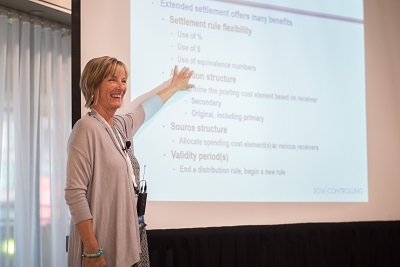
Watch Marjorie Wright Present at the SAP Controlling Financials Conference:
Internal Order Planning and Budgeting
Internal Orders provide planning and budgeting capabilities that help control spending for specific projects, events, and activities. Planned costs represent expected expenditures, while budgets can be used with availability control to monitor spending and help prevent costs from exceeding approved limits.
Internal Orders can also collect both costs and revenues, allowing you to analyze the financial performance of specific activities or projects.
As transactions are posted to Internal Orders, you can monitor planned and actual costs, commitments, and variances using SAP reporting. You can also drill down to the underlying accounting documents and source transactions for detailed analysis.
At period-end, you can settle costs from Internal Orders to other cost objects. An Internal Order can settle to one or multiple receivers according to its settlement rule. Periodic reposting can also be used to allocate costs based on statistical key figures.
Internal Orders can also be created as statistical orders for additional reporting and analysis. Statistical orders do not receive real costs and therefore are not subsequently settled.
The following five types of Internal Orders are available:
1. Overhead Cost Orders
Used for short- to medium-term monitoring of overhead costs associated with specific activities, such as marketing campaigns, trade shows, or other temporary initiatives.
2. Investment Orders
Used to monitor investment-related costs that may subsequently be capitalized and settled to fixed assets.
3. Accrual Orders
Accrual Orders are used to collect and monitor period-related accruals, helping align expenses recorded in Financial Accounting with the periods in which the costs are incurred.
4. Orders with Revenues
Used to collect and monitor both costs and revenues associated with specific activities. These orders can be useful for activities involving external partners or internal initiatives when detailed cost and revenue tracking is required outside the standard sales process.
5. Statistical Orders
A Statistical Order is an Internal Order used for additional reporting and analysis while the actual cost is posted to another real cost object, such as a cost center. Statistical Orders do not receive real costs and are not subsequently settled.
Meet Marjorie Wright at the SAP Controlling Financials Conference
Learn More

Marjorie Wright

Marjorie Wright is an SAP S/4HANA expert, keynote speaker, and CEO and founder of Simply FI-CO, an SAP training and consulting company. She is the author of several SAP books, including SAP S/4HANA Management Accounting Certification Guide and Practical Guide to SAP CO Internal Orders.
Margie is one of our most popular SAP S/4HANA expert speakers at the annual SAP Controlling Financials Conference in San Diego.
Glossary
Accrual Order
An Accrual Order is an Internal Order used to collect and monitor period-related accruals in SAP Controlling.
Cost Center
A Cost Center is an organizational unit used to collect and monitor costs for a defined area of responsibility. Unlike an Internal Order, a cost center typically represents an ongoing organizational function.
Fixed Assets
Fixed Assets are long-term tangible assets, such as buildings, machinery, and equipment. Investment Orders can collect costs that are subsequently capitalized and settled to fixed assets.
Internal Order
An Internal Order is a Controlling (CO) cost object used to plan, collect, monitor, and settle costs for specific activities or purposes. Internal Orders can also support budgeting, availability control, and reporting.
Order Type
An Order Type controls key settings for Internal Orders, including number assignment, status management, planning parameters, and settlement behavior.
Periodic Reposting
Periodic Reposting is used in SAP Controlling to periodically reallocate collected costs from one cost object to other cost objects based on defined rules or statistical key figures.
Settlement
Settlement transfers costs collected on an Internal Order to one or more receiver objects, such as cost centers, fixed assets, or other eligible cost objects, according to the order’s settlement rule.
Statistical Key Figure
A Statistical Key Figure is a measurable value, such as number of employees, square footage, or machine hours, that can be used as a basis for allocating costs in SAP Controlling.
Statistical Order
A Statistical Order is an Internal Order used for additional reporting and analysis while the actual cost is posted to another real cost object, such as a cost center. Statistical Orders do not receive real costs and are not subsequently settled.
Tracing Factor
Tracing Factor defines how costs are distributed among receiver objects during periodic allocations in SAP Controlling. Examples include statistical key figures, percentages, fixed amounts, or other allocation bases.
SAP Fiori
SAP Fiori provides role-based applications for accessing and managing SAP S/4HANA processes. Depending on the system configuration and available apps, users can perform Controlling activities and analyze financial information through the SAP Fiori launchpad.
Settlement Profile
Settlement Profile defines the rules and parameters that control how an Internal Order can be settled, including permitted receiver types and settlement options. The settlement profile is assigned through the order type.
Settlement Rule
Settlement Rule defines how costs collected on an Internal Order are distributed to one or more receiver objects during settlement.
Source Cost Element
Source Cost Element identifies the original cost element from which costs are allocated or settled in SAP Controlling, helping retain information about the nature of the original cost.
SAP Universal Journal
SAP Universal Journal provides a single source of financial and management accounting data in SAP S/4HANA. Actual postings are stored in ACDOCA, enabling integrated reporting across Financial Accounting and Controlling.
Learn more about SAP Internal Orders and other SAP FICO topics with an ERPCorp membership.