SAP Finance & Controlling Blog
- Hits: 15052
Joerg Siebert
Co-founder and Managing Director, Espresso Tutorials
SAP Financials Consultant | Author | Trainer and Speaker
Joerg Siebert is an SAP Financials consultant, author, trainer, and co-founder of Espresso Tutorials. His work combines practical SAP Finance knowledge with books, training, and conference presentations for SAP professionals.
He has worked with organizations in the automotive, healthcare, and service sectors across Europe. Before co-founding Espresso Tutorials, he worked at SAP in Walldorf, including as a product manager for SAP ERP Financials.
- Hits: 12355
Martin Munzel
SAP CO/PS Specialist and Co-founder, Espresso Tutorials
SAP Controlling and Project System
 Martin Munzel is an SAP Controlling (CO) and Project System (PS) specialist and co-founder of Espresso Tutorials. He began working with SAP R/3 at university in 1994, started with Project System, and expanded into Controlling as an SAP consultant at Siemens.
Martin shares practical SAP knowledge through ERPCorp articles, including choosing the right SAP CO object and template allocation in SAP CO.
- Hits: 14874
SAP Finance and Controlling Consultant
SAP Author | Product Costing | SAP Controlling Conference Speaker

Tanya Duncan specializes in SAP Controlling, Product Costing, and SAP S/4HANA Finance. Her experience includes finance transformation and SAP S/4HANA implementation projects, connecting accounting requirements with integrated business processes.
She shares practical SAP knowledge through technical articles, books, and conference presentations. Tanya is a coauthor of SAP S/4HANA Finance and contributes to ERPCorp articles on topics such as purchasing info records in costing variants.
- Hits: 36232
By John Jordan
Explore practical SAP Controlling (CO) tips for cost center accounting, internal orders, profit center accounting, and product cost planning. This page includes excerpts for the first 19 tips and the full table of contents.
- Hits: 13181
By John Jordan
SAP cost component groups let you summarize cost components and display the resulting amounts in cost estimate reports. They help you compare material, labor, and overhead costs across a range of products without examining each material cost estimate separately.
Read more: SAP Cost Component Groups: OKTZ Setup and Reporting
- Hits: 290761
By Ross Christoph
Goods Receipt/Invoice Receipt (GR/IR) clearing is an important part of the procure-to-pay process in SAP Materials Management (MM) and Financial Accounting (FI). The GR/IR clearing account is an interim G/L account that records the offsetting entries for valuated goods receipts and related supplier invoices. Either document may be posted first. Matching postings normally offset at purchase order item level; eligible FI open items are subsequently cleared through automatic clearing.
Read more: SAP GR/IR Clearing: Goods Receipt and Invoice Receipt
- Hits: 17585
By Tom King
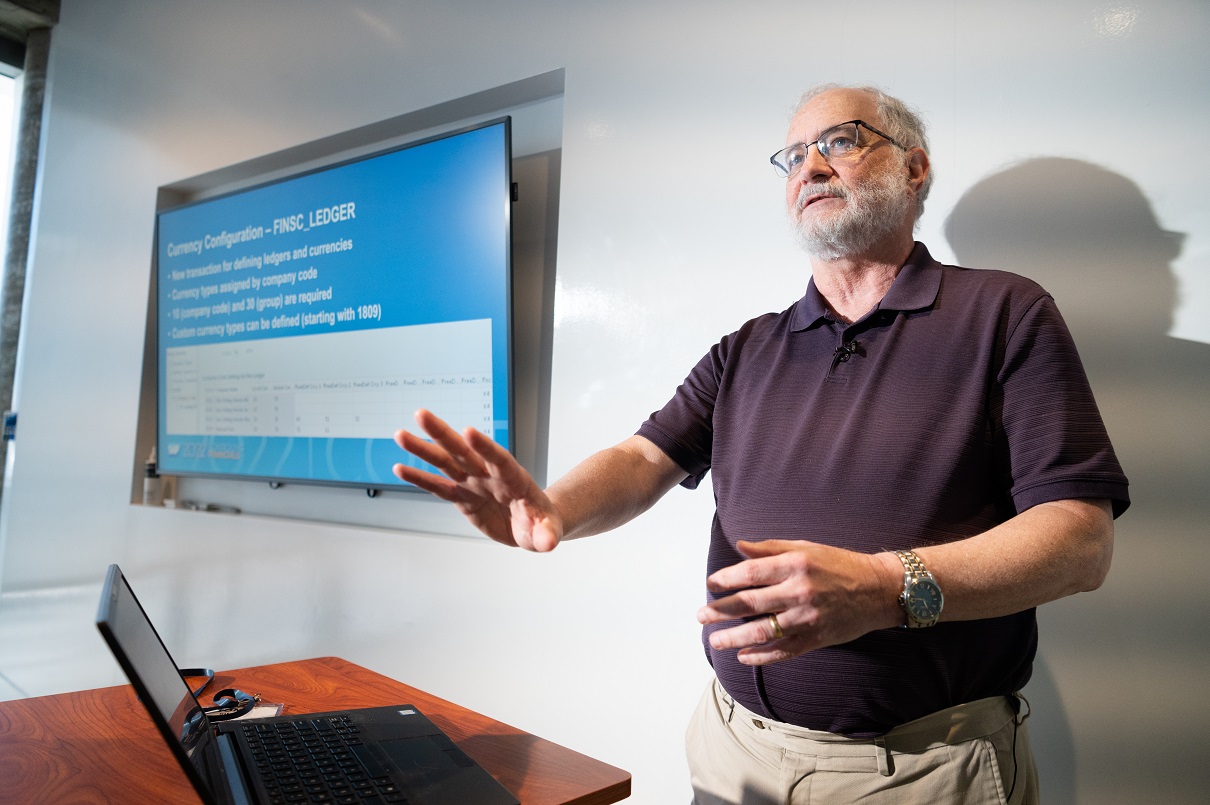 When my company began moving from SAP ECC 6.0 to SAP S/4HANA, I used a sandbox to find out what the conversion would change for Controlling. I tested familiar transactions, checked how actual postings appeared in the Universal Journal, and ran Actual Costing in Material Ledger.
Release context. These observations come from an SAP S/4HANA 1709 sandbox. Use the simplification items and test results for your target release and edition when planning a conversion today.
Read more: Moving to SAP S/4HANA: Controlling Lessons From an ECC Conversion
- Hits: 21188
 I often get asked about the difference between a production order and a process order. Both can collect manufacturing costs, but the choice starts with how production is planned and executed.
Other SAP Controlling objects serve different purposes, from collecting a product’s costs by period to monitoring a maintenance job or departmental spending. This guide compares their uses, master data, and selected transactions.
Read more: SAP Cost Objects in Controlling: Types, Uses, and Transactions
- Hits: 10234
By Paul Ovigele
 SAP Material Ledger FI line item texts help explain where Actual Costing differences are posted at period end. Understanding these descriptions makes it easier to distinguish inventory revaluation, consumption revaluation, and transfers between production levels.
The Post Closing step can generate many accounting entries because differences follow how a material was used. This guide explains the classic posting texts and provides a practical reference for reviewing Material Ledger closing documents.
- Hits: 6350
By John Jordan
Download John Jordan’s free SAP PRESS sample on production order settlement. Chapter 17 of Product Cost Controlling with SAP, third edition, covers settlement configuration and period-end processing.
Read more: SAP Production Order Settlement: Free Book Sample
- Hits: 11935
Activity type tutorials by Tom King
SAP activity types classify work performed by cost centers, such as machine hours or maintenance hours. The activity type category controls how quantities are recorded and allocated, while the activity price values the allocation.
Read more: SAP Activity Type Categories: Guide to the Posting Series
- Hits: 16519
By Tom King
SAP activity type category 5 supports target=actual activity allocation. In the classic process, SAP calculates actual activity quantities from planned receiver activity inputs and operating rates, then posts the allocation with transaction KNMA.
Read more: SAP Category 5 Activity Types: Target=Actual Allocation
- Hits: 13681
By Tom King
SAP activity type category 4 records activity quantities on a cost center without allocating them to receiver objects. The quantity supports operating-rate and target-cost analysis while the costs remain on the cost center.
Read more: SAP Category 4 Activity Types: KB51N Without Allocation
- Hits: 17467
By Tom King
SAP activity type category 3 combines manual quantity entry with indirect activity allocation. You record the sender's actual activity with KB51N, then run KSC5 to distribute that quantity using the cycle's sender/receiver relationships and tracing factors.
Read more: SAP Category 3 Activity Types: Manual Entry, Indirect Allocation
- Hits: 17251
By Tom King
SAP category 2 activity types can calculate sender quantities from activity already posted in receiver cost centers. In this example, machine hours drive the quantity of support activity allocated from cost center SND2, using indirect activity allocation rather than a separate manual sender posting.
Read more: SAP Category 2 Activity Allocation Using Receiver Activity
- Hits: 31189
By Tom King
Category 2 activity types are for indirect determination and indirect allocation.
Read more: SAP Activity Postings 2: Category 2 Activity Types
- Hits: 67101
By Tom King
Let's start with activity type category 1 (manual entry, manual allocation) which is the most common. Activity types defined with this category post directly from a cost center to a receiver cost object.
Read more: SAP Category 1 Activity Allocation: KB21N Example
- Hits: 8838
By Paul Ovigele

SAP Material Ledger helps you understand inventory values and material cost differences. Its optional Actual Costing functionality calculates period-end material costs while retaining standard cost as a benchmark during the period.
This introduction explains how standard price, moving average price, and Actual Costing fit together. For SAP S/4HANA: Material Ledger is mandatory for inventory valuation; Actual Costing remains optional. ERPCorp has updated Paul’s original introduction to clarify these distinctions.
Read more: SAP Material Ledger Basics: Standard vs. Actual Costs
- Hits: 10536
 In this 2015 SAP Controlling Conference recording, Rogerio Faleiros explains how to avoid common configuration pitfalls in costing-based SAP Profitability Analysis (CO-PA). The session covers user exits, valuation variants, costing sheets, and how to check cost of goods sold (COGS) in posted CO-PA documents.
Read more: How to Avoid Common SAP CO-PA Configuration Pitfalls